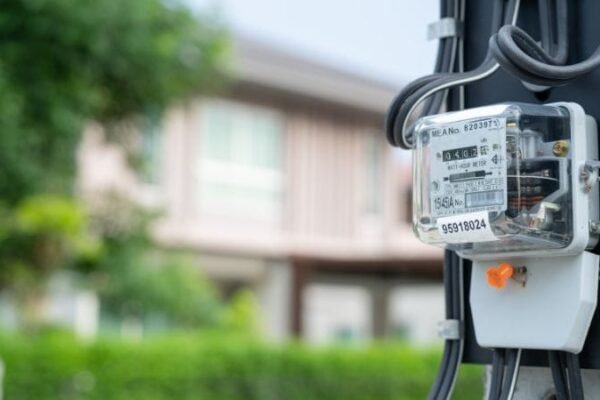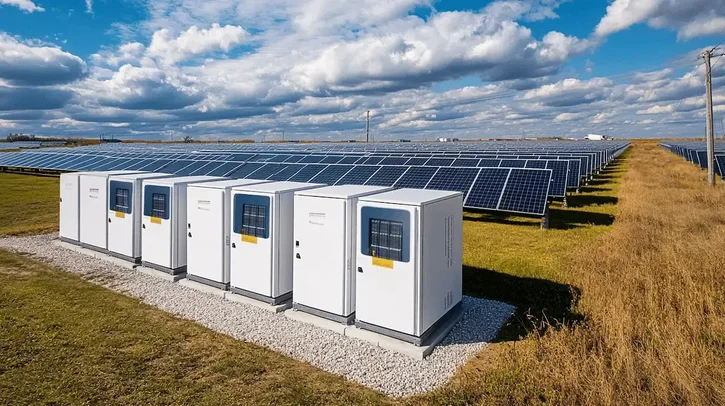
Solar panels produce most of their energy in the middle of the day, but many homes in Greece use the most electricity in the evening. A battery bridges that gap. With net metering closed to new applications since 2024 and net billing now the main scheme for new systems, battery storage has become one of the most common questions we hear from homeowners, expats, holiday-home owners and businesses. This guide explains how batteries work with solar PV in Greece, what zero export means, and how to decide whether storage is right for you.
Why batteries matter more under net billing
Under the old net metering scheme, energy you exported to the grid was offset against your consumption over a long period, so the grid acted almost like a free battery. Under net billing (ταυτοχρονισμένος συμψηφισμός), your production is offset against your consumption within the same short time window, and surplus energy you export is compensated based on market prices. Energy you draw from the grid at night is billed normally.
That means the value of a new solar system comes mainly from the energy you use yourself. A battery increases that share by storing daytime surplus and releasing it in the evening, so you buy less electricity from the grid.
How a solar battery system works
A typical home system has four main parts:
- Solar panels that generate direct current (DC) electricity.
- An inverter, often a hybrid inverter, that converts DC to alternating current (AC) for your home and manages charging.
- A battery, usually lithium-based, that stores surplus energy.
- A monitoring and control system that shows production, consumption and battery status, and decides when to charge and discharge.
During the day, the panels power your home first. Any surplus charges the battery. When the battery is full, the remaining surplus is either exported to the grid (net billing) or the system limits production (zero export). In the evening, the battery supplies your home until it reaches its minimum charge, and then the grid takes over.
Zero export: self-consumption without feeding the grid
A zero-export system (zero feed-in) is designed so that no energy is fed into the grid at all. Everything the panels produce is used on site or stored in a battery. The September 2026 self-consumption framework (Ministerial Decision ΥΠΕΝ/ΔΑΠΕΕΚ/102876/1958, ΦΕΚ Β΄ 5573/14.9.2026) explicitly provides for this option, and a zero-export system does not need a net billing agreement with your supplier.
Zero export can suit properties where exporting is not attractive or where grid capacity is limited. Without a battery, though, a zero-export system wastes its midday surplus, so the two are often combined.
Standalone batteries
The same framework also allows standalone battery storage for self-consumption, without a solar system and without feeding energy into the grid. In that case, the battery charges from the grid and supplies your home later. The rules require equipment that ensures no energy is exported, so the design and metering must be done properly. Whether this makes financial sense depends on your tariff and how your consumption is spread across the day.
Is a battery worth it for you?
There is no universal answer, and we prefer to model each case rather than recommend a battery by default. These questions usually decide it:
- When do you use electricity? If most of your consumption happens in the evening or at night, a battery adds more value.
- How large is your solar system compared with your daytime use? A system that produces a large midday surplus benefits more from storage.
- Do you want backup power? Some systems can keep essential circuits running during a power cut. This needs a specific inverter and wiring design, so mention it at the start.
- How often is the property occupied? For holiday homes, the battery is most useful during the months the house is in use, especially with air conditioning in summer evenings.
- What does the equipment cost today? Battery prices change, so a current quotation is the only reliable basis for a decision.
Homes, holiday homes and businesses
Permanent homes
Families who are out during the day and home in the evening are often the best candidates for storage. A battery lets the morning and midday production cover dinner, lighting, cooking and air conditioning after sunset.
Holiday homes and rentals
Owners who live abroad often want a system that works without attention. A battery combined with remote monitoring lets you see production and storage from anywhere, and alerts help you catch problems before guests notice them.
Businesses
Many businesses already use most of their solar energy during working hours. For them, a battery is useful when there are evening loads, such as hotels, restaurants or cold stores, or when it can help manage peaks in demand. A detailed load-profile study is essential.
Adding a battery to an existing system
Many existing systems can be upgraded with storage, but compatibility depends on your inverter and on the scheme your system is connected under. If you have a net-metered system, check with us before adding anything, as changes to the installation can affect your existing arrangement. A short technical assessment avoids buying the wrong equipment.
Safety, installation and maintenance
Batteries store a lot of energy, so they must be installed by qualified technicians, in a suitable location with proper ventilation, protection devices and earthing, and according to the manufacturer’s instructions. Choose established brands with clear warranties and local support. Once installed, batteries need little attention, but the whole system benefits from periodic inspection and from monitoring that flags unusual behaviour early.
Storage solutions from SA Solar
SA Solar designs and installs solar PV and battery storage systems for homes and businesses across Greece, from the consumption study to installation, grid connection and monitoring. Learn more about our solar PV sales and installation, and about our service and repair and maintenance for existing systems. As part of the SA Construction group, we can also coordinate storage with wider renovation or energy-upgrade works.
Wondering whether a battery makes sense for your property? Contact us for a free assessment and we will model your consumption before recommending anything.